
Getting Started Menu: Consonants Vowels Syllables Typing Hangeul
As we all know, words are made up of many different syllables, and those syllables can vary in complexity from extremely simple (the “a” syllable in “amen”, for example) to more intricate (like the single syllable that makes up the word “through”). As we’ve seen, in Hangeul syllables can be made up of two letters—a vowel and a consonant—or they can become more complex.
On this page, we’ll look at syllables made up of three or four letters. Always remember: no matter how complex a syllable may be, in Hangeul, the letters will always come together to form a box-like diagram.

As syllables get more complex, we no longer have a simple side-by-side or top-down pattern in the way they come together. However, there are certain patterns we can count on. In this example, the pattern is Consonant-Vowel-Consonant (or, Consonant-Vowel-Consonant-Consonant, in the case of a fourth consonant), thus:
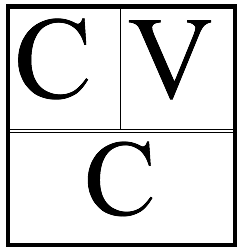
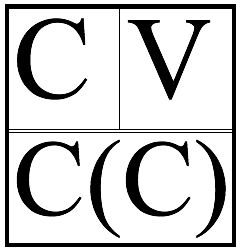
You’ll recognize the changes in shape for some Hangeul letters when they join together in this way. For example: ㄱ (kiyoek), ㅏ(a) , and ㅇ(ng) become 강
Here are some examples of this pattern of syllable formation. See if you can tell where the consonants are and where the vowel is. Do they all match the pattern?
선 생 님 학 생 안 녕 책 상 삶 값

This might look familiar! Here we see a very similar top-down arrangement like we’ve seen before. This arrangement involves the same vowels as the simpler two-letter top-down syllable we studied earlier: ㅗ ㅛ ㅜ ㅠ ㅡ. Only now, we have three or four letters that make up the syllable, arranged as Consonant-Vowel-Consonant (or, Consonant-Vowel-Consonant-Consonant.)
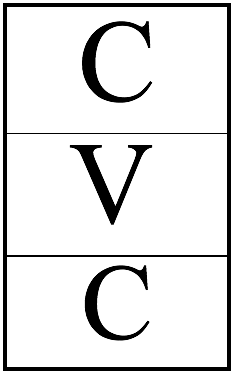
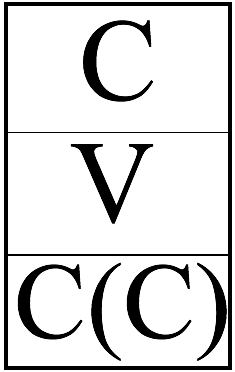
When you pair two consonants and a vowel in this formation, the shapes stay pretty much the same. For example:ㅅ (siot), ㅗ (o), and ㄴ (nieun) become 손
Here are some examples of this pattern of syllable formation. See if you can tell where the consonants are and where the vowel is. Do they all match the pattern?
돈 공 콩 곰 문 꼭 킁 혼 통 은 는 슭

Now let’s look at a syllable pattern that always takes four letters: two consonants and two vowels. You’ll notice in this pattern that the upright vowels and the horizontal vowels play a key role in determining the shape of the syllable. Generally, the pattern is Consonant-Vowel-Vowel-Consonant.
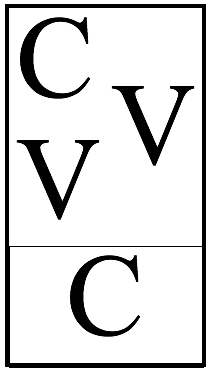
When syllables get this complex, it’s important to really understand how to read them. At first, looking at a pattern like this might feel overwhelming or confusing, but if you take them one letter at a time, it’s easy for them to make sense. For example: ㄱ (kiyoek), ㅜ (u), ㅓ (ŏ), and ㄴ (nieun) become 권
Spend some time deciphering the syllables below. Look at each one carefully to identify the shapes you’ve become familiar with.
